What happens when traditional self-service industries move beyond coins and cash? Cashless payments are doing more than giving customers another way to pay. They are changing operating models that were originally built around physical currency, while meeting consumers’ growing expectations for faster, easier digital transactions.
For unattended retail operators, connected cashless payments can reduce purchase friction while turning individual transactions into valuable operating information. Businesses can gain greater visibility into sales, machine performance, demand, inventory, and service needs. They can also use connected payments to support digital receipts, loyalty programs, transaction histories, and stronger ongoing customer relationships. The larger opportunity isn’t simply replacing coins and bills—it’s using connected payments to rethink how the entire self-service business operates.
Coins for laundry. Dollar bills for vending machines. Exact change for parking meters.
For decades, self-service industries were built on the assumption that customers would pay with physical currency. The machines accepted cash or change, delivered the product or service, and the interaction ended. Operators would come by later to collect the money, reconcile it, and then evaluate the location’s performance.
Of course, that model made sense when these machines and systems were designed. Cash was king. It was familiar, broadly used, and simple to support from a machine perspective. The technology was largely analog, for lack of a better word. The industries matured before smartphones, network connections, and online accounts were available. Machines could operate isolated and independently for years, with limited changes to the payment experience.
But the world around those machines changed.
It likely won’t surprise you that in 2024, cash accounted for just 14% of U.S. consumer payments. Credit and debit cards represented 65%. Compared to previous generations, those numbers are easy to describe as a change in payment preference, but I believe it’s an even more significant industry shift than that.
Cash was never just a way to complete a transaction. It was foundational to the machines, business model, and customer journey that defined self-service and unattended retail. At one point, cash truly defined the market’s innovation, and now that foundation is being rocked by cashless payments.
How Did Cash Become Part of the Operating System?
It’s a mistake to label cash-based industries as “slow to adopt technology.” Cash survived and became the bedrock of these transactions because it solved real problems. It was portable and able to work across many different types of machines, providing a wide range of products and services. Customers understood how to use cash. Operators knew how to collect it. A machine could sit anywhere with a power outlet, accept a coin, and conduct the transaction.
Entire industries developed around those capabilities. For example, an operator’s entire daily and weekly schedule was inherently based around cash. When did the money need to be collected? How did that relate to when the machine needed to be refilled or serviced? These operations were part of running the business, but the methodology was largely a response to the limitations of cash as a payment system.
And if there is one thing we’ve seen happen over and over again in business, it’s that an industry can become so accustomed to a constraint that it stops recognizing it as a limitation. Instead, it becomes an assumed part of the operation. The customer learns to bring quarters, and the operator learns to collect cash. The machines are built around these behaviors, and eventually, everyone treats the inconvenience of cash as part of the category.
Consider this: You’re living in an apartment complex with a basement laundry room, and you decide that you’re going to do your laundry over the weekend. On Friday afternoon, you stop by the bank to get a roll of quarters so you can have your laundry day.
You do exactly $10 worth of laundry. Not because you had $10 worth of laundry to do, but because that’s all the quarters you had. Because of this, maybe you mixed your whites with your colors, or overloaded the machines because you had a set number of loads you could afford to do. And by the time you ran out of quarters, you still had clothes in the dryer that weren’t fully dry.
In reality, you may have had $12 or $14 worth of laundry to do, but you only had a $10 roll of quarters, and most loads cost around $2.50 or $2.75.
Embracing a digital transformation begins by asking whether those industry-defining assumptions still align with how people live.
Why Did Customer Expectations Change?
“People don’t align their payment expectations with industry constraints. They don’t separate their purchasing methods from retailer to retailer. If they can make cashless payments at a coffee shop or grocery store, then they will expect to pay with a card at a vending machine or parking meter.”
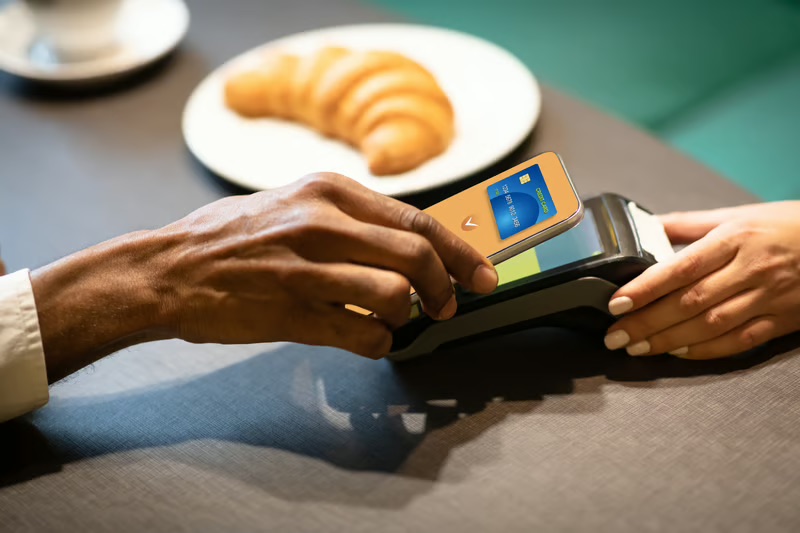
It feels retrograde to fish around for loose change at a laundromat if they can just tap a phone three times and have a sandwich delivered to their office.
They’ve learned that payments can be fast, digital, and available on the devices they’re already carrying from place to place. That expectation cuts across industries and follows them to vending, laundry, amusement parks, car washes, and other self-service environments. In fact, self-service environments have followed them into traditionally attended retail spaces, such as grocery stores.
In 2022, Pew Research Center found that 41% of Americans said they made zero cash purchases in a typical week. Nearly half of Americans weren’t paying cash, and that was four years ago. Needless to say, this consumer behavior creates a mismatch. The customer is ready to buy, but the machine is still built around an antiquated payment behavior.
In unattended retail, this is a lost sale.
“Payment friction is incredibly consequential in the self-service retail market. In those contexts, a customer who can’t complete the transaction will often just walk away. Worst of all, the operator may never know there was demand or missed opportunities, because a failed cash interaction leaves little evidence.”
Does Convenience Have Direct Commercial Value?
Convenience isn’t a soft benefit. It’s not just a “nice to have” that improves customer satisfaction but sits apart from the actual economics of the business. In self-service commerce, convenience is the name of the game and is often directly tied to revenue. A customer who can pay immediately is more likely to make the purchase. A customer who encounters friction, whether from limited payment options or unnecessary steps, is more likely to abandon the transaction.
We can learn some specifics from industry data. The average cashless vending ticket in 2024 was $2.24, compared to $1.78 for cash transactions. That’s a 37% difference. Obviously, not every operator will see the same result, but it reveals that the payment method isn’t a neutral factor. It plays a major role in whether a customer will buy and how freely they make purchasing decisions.
Cashless payments don’t encourage people to spend without thinking, but they do remove an unrelated obstacle. It helps the customer evaluate whether the product is worth the price, rather than determining whether they have the right currency to complete the transaction. Removing that payment barrier is just the first visible benefit of going cashless.
Can Cashless Payments Make Unattended Transactions Visible?
A moment in the life of a traditional, cash-only, unattended retail machine: The customer arrives. The machine accepts money. The purchase occurs.
Some time later, someone visits the machine, collects the money, and compares the amount with inventory or meter readings. All is good, and both the operator and the machine hum right along in their own little worlds. Unfortunately, the operator has learned very little.
Sure, they know the amount collected and what inventory was purchased. But they don’t know when those transactions were made. They don’t know the rate at which products were sold. They have no idea if there were missed opportunities during high-traffic periods. They don’t know if purchase attempts failed, or how long a machine was on the fritz before collection day.
This is where the value of connected cashless payments expands beyond convenience. It’s the network effect of making transactions visible at the machine level. An operator can begin to analyze sales activity by location, time, machine, and product. That supports better inventory, pricing, and placement. This visibility fundamentally changes what an operator can do.
Say a vending operator sees that a particular product is consistently selling out by midday. That informs what they need to do with the product mix, planogram, and even refill frequency. Let’s think about a laundromat owner with machines that are receiving payment attempts but failing to start. Now that information can trigger service visits before too many customers have a negative experience or make a complaint.
With connected cashless payments, the transaction becomes more than a financial record. It elevates into an operating signal.
How Does Better Data Lead to Better Decisions?
Technology leaders love to emphasize the amount of data a connected system can generate. Quantity is great, but operators should be more interested in the quality of the decision-making the data supports. More information isn’t automatically useful.
Many modern businesses have become especially good at creating dozens of reports and alerts without improving revenue or efficiency. In some cases, adding technology complicates the operation. It creates new systems for employees to monitor or increases complexity without simplifying decisions.
For unattended retail, the practical application of data comes down to a few key questions:
- Can the operator identify a problem sooner?
- Can a route be planned around actual need rather than habit?
- Can inventory be placed according to real demand?
- Can an unnecessary service visit be avoided?
- Can a customer issue be resolved with the transaction already identified?
When the answer is yes, data becomes operating intelligence. This is one reason cashless payments can become a foundation for broader digital transformation. They create a connected event at the point where the customer, machine, and business meet. Once that event is visible, other systems can respond to it.
Can An Unattended Machine Become Part of a Larger Customer Experience?
One way to put those connected systems to work is to expand the customer experience through unattended retail. The industry doesn’t need to start at zero with each transaction. Mobile and connected cashless payments make customer continuity possible.
Machines working on a network unlock a suite of customer retention services. Things like digital receipts, loyalty benefits, transaction history, and direct customer communication are all possible with the right infrastructure and interface. A machine that once functioned as an isolated piece of equipment can become the gateway touchpoint to a broader customer relationship.
“Once payment is connected to a customer identity, transaction data, and ongoing loyalty, it’s no longer a standalone feature. It’s now a core part of the operational infrastructure.”
The machine still performs the same basic function (dispensing a product, starting a wash cycle, etc.), but its relationship with the rest of the business evolves. It’s now a communication node, creating useful records, alerts, and actively informing an ongoing customer experience.
The shift to cashless payments is similar across much of self-service commerce, but the operating value can differ by category.
In vending, accepting cashless payments removes a purchase barrier while creating machine-level sales visibility. Operators can use the information to improve product assortment, refill schedules, and service response.
In laundry, connected accounts can support stored value and loyalty features. Cashless payment creates less friction at the point of purchase for high-repetition, high-frequency interactions.
For car washes, digital payments can enable memberships and other recurring relationships, such as stored value and loyalty rewards. Connected machines can unlock multi-location transaction history, rather than treating each visit as an isolated purchase.
Amusement and entertainment systems can make the most of stored value and rewards when connected through cashless payment. It can also simplify reloads, increasing the average customer value by removing transaction barriers or bottlenecks.
Cashless payments can also fuel new segments in the self-service retail category. Micro markets are a rapidly growing service in office and workplace settings. In 2023, micro markets saw a 36% increase in locations, and 96% of micro market sales were cashless. This is a powerful new service category unlocked in locations where traditional staffing isn’t practical.
Does Cash Still Have a Role?
The growth of cashless commerce is more than a trend, but it’s not a universal preference. Even though cash accounted for a smaller share of total U.S. payments in 2024, it remained important for people aged 55+ and low-income households. In fact, 22% of adults with household income below $25,000 were unbanked, meaning they operated almost entirely in cash.
For business owners, this means the right strategy may not be to remove cash immediately. Instead, a step-by-step expansion of payment choices might lead to the most successful adoption. This allows them to watch customer behavior and location data before making wholesale changes to their equipment. As with any innovation, cashless transformation works best when it removes barriers without creating new ones. Since the cost of processing cash in unattended retail is high (e.g., collection costs), machine owners could offer limited cash acceptance at a higher price or on fewer machines.
Does Removing Cash Reveal the Larger Opportunity?
Coins and crisp bills drove traditional self-service industries for a very long time. They explained how machines were designed and how customers prepared for transactions. It defined how business owners led their operations, building collection and refill routes to maximize performance. As cashless payments remove the constraints imposed by hard currency, they reveal opportunities that go well beyond checkout.
There’s now much greater choice and convenience for the customer, beyond simply where the machine is located. The operator gains information and visibility delivered much faster than with traditional machine information. The equipment itself can become connected to the wider business, allowing transactions to support loyalty, service, and overall operational decision-making.
Leaders who see the greatest benefit from cashless payments will be those who view it as more than just another way to pay. It will be the ones who use connected transaction data to eliminate unnecessary work, better understand their business, and engage their customers beyond the machine.
Cashless payments replace much more than coins and bills. They allow a traditional industry to reconsider the entire system built around them.
Frequently Asked Questions (FAQs)
1. How are cashless payments changing traditional industries?
Cashless payments are changing traditional industries by removing payment friction and connecting previously isolated machines to broader digital systems. In vending, laundry, car washes, amusement, parking, and micro markets, this can improve customer convenience while giving operators better visibility into transactions, equipment performance, demand, and service needs.
2. Why did traditional self-service industries rely on cash for so long?
Traditional self-service industries relied on cash because it was familiar, portable, and relatively simple for machines to accept. Cash-based equipment could operate independently without smartphones, customer accounts, or network connectivity. Over time, operators also built collection routes, reconciliation processes, and service schedules around the limitations of physical currency.
3. How do cashless payments improve the customer experience?
Cashless payments improve the customer experience by allowing people to complete purchases without finding cash or exact change. They can also support faster transactions, digital receipts, transaction history, stored value, loyalty benefits, refunds, and easier return visits. In unattended retail, these capabilities are especially valuable because there may be no employee present to help recover a failed transaction.
4. How do cashless payments support smarter retail operations?
Cashless payments support smarter retail operations by turning transactions into operating signals. Instead of waiting for a collection or service visit to understand what happened, operators may be able to monitor activity remotely and respond sooner. This can help them avoid unnecessary site visits, identify problems earlier, plan routes based on actual need, and place inventory according to real demand.
5. Why are cashless payments considered a foundation for digital transformation?
Cashless payments can become a foundation for digital transformation because they connect the customer, machine, transaction, and operator. Once that connection exists, the business can support digital receipts, loyalty, customer communication, remote monitoring, transaction history, service alerts, and broader technology integrations. The larger opportunity is not simply replacing coins and bills, but reconsidering the operating system built around them.