
What if your customers’ everyday frustrations are actually your best source of innovation? Small inconveniences, abandoned transactions, unnecessary steps, and customer workarounds can reveal outdated assumptions hiding inside products and business processes. When these problems happen repeatedly, seemingly minor friction can become a significant source of lost time, revenue, and opportunity.
Customer experience innovation starts by observing how people actually interact with a product or service and identifying where they have learned to compensate for poor experiences. Instead of simply fixing the visible complaint, businesses can investigate its underlying cause and use those insights to redesign processes, technology, and even operating models. By creating a repeatable discipline for finding, testing, and eliminating friction, organizations can turn ordinary customer problems into opportunities for meaningful innovation and broader digital transformation.
Melanie Perkins was teaching university design courses when she came to grips with a problem. Her students were taking a long time to understand the basics of the industry-standard design programs. She wondered why things had to be so complicated and whether there was a way to let everyone create beautiful designs.
From that moment, Canva was born and has since revolutionized access to usable, effective design software.
Stories like this show how innovation usually begins. A customer encounters a routine task that just takes way too much effort. Someone notices and starts asking why the product works that way. Boom. Lightning strikes.
Customer problems tell us a lot. These challenges show where products, processes, or industries rely on outdated assumptions. They reveal the extra steps customers take to get what they need and highlight the extra work employees do when the system doesn’t help them.
These insights make customer experience a valuable source of business strategy. Moments of friction can help leaders decide where to apply innovation. Where can technology help? Which processes need to be redesigned? Where is there a larger market opportunity waiting?
Digital transformation of any kind works best on this type of evidence. A company sees how people live day to day, then rebuilds a system to serve that reality.
Why Do the Best Innovation Opportunities Often Look Small?
The biggest innovations rarely appear as major opportunities at first. It might be a delayed transaction or a clumsy interface. It might be an extra trip, a confusing interaction, or an abandoned sale. Admittedly, that last outcome isn’t a minor problem, but scale changes the meaning of those moments.
“A single five-minute delay isn’t a big deal. But if 10,000 customers experience it, that amounts to over 800 hours lost. One missed sale might go unnoticed, but if a payment fails for a hundred customers, it could hurt revenue for a year without anyone realizing why.”
This is especially important in self-service commerce. A customer who has trouble at a staffed counter can ask for help. A person standing in front of a vending machine has few options. In fact, the transaction depends on the design working without explanation. A missed opportunity leaves a very small footprint, and the absence of data may make the problem seem smaller than it is.
Leaders searching for areas of innovation should pay attention to the repeated instances that appear individually unremarkable. With frequency, a minor inconvenience becomes a significant expense. If you can identify a persistent source of lost revenue, you might have found a place where your market is ready for a different experience.
How Are Customer Experience Complaints Symptoms of Larger Issues?
A customer complaint tells a business where there’s a pain point. Then the more valuable work begins when the team interrogates the assumption that created it.
Imagine a customer says the checkout process is too slow. You could shorten instructions, reduce clicks, add a button, or speed up the steps. These fixes help on the surface. But it’s also important to ask why each step is there in the first place.
These kinds of situations happen all the time. Maybe the customer has to re-enter information that the company already has. Perhaps manual approval is still required because an older system can’t process the transaction automatically. An internal department might have added an unnecessary step years ago to address an issue that no longer occurs.
Processes gather history and extra rules over time. Each policy or limit leaves a mark. Eventually, these decisions can make things harder for customers across the business. When reviewing old processes, I find these questions helpful:
- Why does this step exist?
- Which limitation created it?
- Does that limitation still apply?
- Who spends time or money when it fails?
- Where has the customer learned to accommodate the business?
These questions help understand the system and identify the real needs of the customer and operator.
This is the first step toward human-centered design. It’s a practice centered on the needs and experiences of customers, developing solutions around them. It balances those needs with technical and business viability. It asks us to view a complaint as an opportunity for product improvement while also investigating whether old assumptions might unlock a new operating model.
What’s the Most Valuable Customer Experience Friction?
Businesses tend to respond to loud problems. We react to support tickets and negative reviews. Direct complaints leave visible signals for us to respond to.
But areas where customers have accepted friction can go unnoticed. Customers develop routines around poor experiences. For example, someone living in an apartment complex might stop by the bank on Friday to get a roll of quarters for their weekend laundry. It’s an extra stop and is sometimes inconvenient, but for them, it might just be part of the tradeoff of using their apartment’s laundry room.
“Once customers have ingrained a workaround, they often stop expecting the company to remove it.”
Established industries have many examples of accepted friction because their processes developed around earlier technology. Equipment may remain in service for decades. This causes the operator and customer to inherit the habits required to use them. That experience can feel normal within the category but outdated elsewhere.
Innovation requires enough familiarity to understand the customer’s goals, and enough imagination to remove the unseen friction surrounding them.
Why Do Founders Close to the Work Often See More?
Research can identify patterns in a market, but firsthand operational experience gives those patterns context. More often than not, the customer journey and the operating system supporting it are economically connected.
I started working with vending machines as a teenager. That experience taught me how customers behaved at the machine and how operators worked behind the scenes. I saw how collections and service calls functioned with little connection to the rest of the business. Product decisions and location placements were often made at a remove from the actual customer.
Watching customers can reveal where they get stuck during a transaction. It might be a confusing screen or an instruction that’s hard to see. Watching these moments unfold offers useful insights.
Founders and product leaders often spend time close to the work and see how people compensate for poor experiences. They watch customers complete the task in the environment where it occurs. This direct exposure creates specificity. It’s no longer “customers find the process difficult.” It’s knowing exactly what’s causing the problem.
In larger organizations, especially in self-service retail, this customer observation can fade. The key is not to let layers of logistics dull the signal from the customer to the operator.
How Can We Go From Customer Fix to Digital Transformation?
Many initiatives start with a broad directive to “modernize.” So teams buy software, migrate data, and build new digital toolsets. Those are major investments of time and money, so they had better solve customer pain points, right?
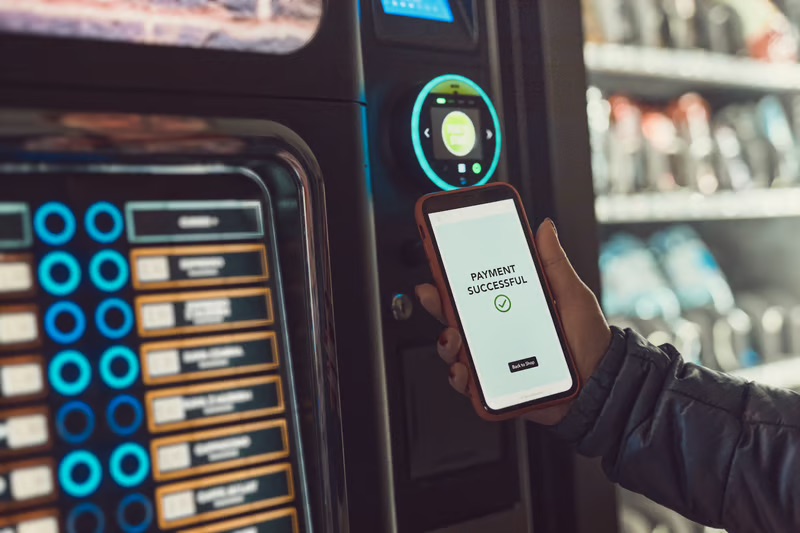
Real-life customer problems provide a useful starting point for technological and digital transformation. Consider payment in an unattended retail transaction. The simple innovation is to provide a familiar cashless option. The bigger opportunity is to expand monitoring, service, and rewards once the point-of-transaction is connected.
The first improvement provided payment options. The surrounding system expands what the entire business can see and do.
Drilling down into equipment service can reveal a similar path. Out-of-order machines used to mean missed transactions until the failure was noticed. Now, a connected monitoring system can trigger a service alert and provide diagnostic information. Machine downtime is minimized, and the customer experience improves as the operating model changes.
This is a transformation grounded in real need and behavior. A customer problem (payment options, out-of-service equipment) identifies where the work should start. Then the systems surrounding that need determine how much value the company can create in the change.
A focused point of entry can lead to company-wide transformation because customer experiences cross organizational boundaries. Successful transactions touch product design, payments, and operations. Improving the customer experience requires those different parts of the business to work together.
How Can Organizations Build a Friction-Finding Discipline?
Self-service retailers need a repeatable way to notice customer problems before they become urgent. The following framework can help teams identify points of friction and understand their cause. It also provides a method for testing solutions that improve the customer experience.
1. Observe what customers do
Start with behavior as well as stated preferences.
Customers can talk about their goals and frustrations, but what they do often tells you more. Look for pauses, repeated tries, and abandoned transactions that might not show up in interviews or surveys.
2. Track where the experience breaks down
Check where transactions fail, which support issues keep coming up, and how long it takes to fix problems. Notice delays that employees now see as normal.
The informal tools people use can reveal a lot. Things like spreadsheets, notes, manual reminders, and side processes often show where the main system isn’t working well.
3. Listen to frontline employees
Employees closest to customers often see friction before leadership does.
They hear the same questions over and over, handle repeated exceptions, and know which rules cause confusion. They also know what information is usually missing when a problem comes to them.
4. Separate the symptom from the cause
Once a problem is visible, investigate what’s creating it.
Many support requests may stem from unclear instructions, unreliable equipment, missing information, or overly demanding processes for customers. Each cause needs a different solution.
The goal is to identify the underlying assumption or system behind the complaint before deciding what to fix or build.
5. Test one change
Start small. Remove one step, improve one handoff, or connect one missing piece of information. Then see how customers and employees react and measure the results.
6. Review every addition for simplicity
New features can introduce new decisions, systems, and exceptions.
Before expanding a solution, consider how many choices the customer must make, how many tools an employee must monitor, and how much added complexity the infrastructure must support. The value created should justify the operational weight being added.
7. Expand what works
When a tested change removes friction, turn the lesson into a repeatable process.
Write down the cause, the solution, and what made it work. Then look for the same problem in other parts of the business.
Over time, this approach helps teams spot customer problems, track them through the system, test real improvements, and spread the solutions that improve experiences.
Where Have Customers Have Learned to Compensate?
The next big innovation might be hidden in a moment that customers no longer talk about. It could be an extra step they think is needed, a workaround they’ve learned, or a transaction they give up on without saying anything.
Employees may have built their own process around the same limitation. An operator may accept the resulting cost because the category has always worked that way.
These moments deserve attention because they show where the system no longer fits its users.
“Solving the visible frustration improves the customer experience, but digging deeper into the problem can reveal hidden demand and eliminate unnecessary operational work. This is often a clear starting point for effective transformation.”
The companies that find these opportunities stay close to customers and operators. They study the behavior surrounding the complaint and question the assumptions built into the current process. Then they create repeatable systems that make a better experience possible at scale.
Innovation often starts with an ordinary person trying to complete an ordinary task. The opportunity appears when someone notices how hard the system is making it.
Frequently Asked Questions (FAQs)
1. Why are customer experience problems a strong source of innovation?
Customer experience problems reveal where a product, process, or business model no longer fits how people behave. A complaint, delay, workaround, or abandoned transaction can indicate an outdated assumption within the system. When companies investigate the root cause, they often find opportunities to improve the experience, reduce operating costs, and create new products or services.
2. How can small customer experience problems lead to major business opportunities?
A small inconvenience becomes more important when it repeats across thousands of customers, transactions, or locations. One five-minute delay may seem minor, but the same delay at scale can consume hundreds of hours. Repeated friction may also cause lost sales, higher support costs, and lower customer retention. Innovation often begins by recognizing the cumulative value of solving that recurring problem.
3. Why should companies look beyond customer complaints?
A complaint usually describes the visible symptom of a larger issue. The underlying cause may be an old policy, disconnected technology, unreliable equipment, or a process designed around a limitation that no longer exists. Companies can uncover better innovation opportunities by asking why the problem occurs and which assumption created it.
4. What is accepted friction in the customer experience?
Accepted friction is a poor experience that customers have learned to work around. They may bring quarters to a laundromat, write down information before contacting support, or arrive early because they expect delays. These behaviors may no longer generate complaints, but they still signal unmet needs and opportunities for a better customer experience.
5. How does customer experience connect to digital transformation?
Customer experience gives digital transformation a practical starting point. Instead of modernizing broadly without a clear outcome, companies can begin with a specific customer problem and redesign the surrounding system. A payment issue, for example, may lead to cashless transactions, connected equipment, remote monitoring, loyalty features, and better operator data.