
Why is the best customer experience often the one customers never notice? An effortless customer experience allows people to complete everyday transactions without unnecessary frustration, delays, or complications. Drawing on decades of experience operating vending machines and developing self-service technology, Paresh Patel explains why businesses should focus less on making routine transactions memorable and more on removing the obstacles customers have learned to tolerate. From outdated coin-operated machines to complicated payment processes, even small inconveniences can discourage purchases and create missed revenue opportunities.
Through his experience developing PayRange, Paresh illustrates how digital transformation and cashless payment technology can simplify transactions while improving operational efficiency. The article also explores why businesses should prioritize reducing customer effort over adding unnecessary features, how reliable technology can improve customer satisfaction, and why transaction data can reveal problems customers never report. Ultimately, Paresh argues that the most valuable innovations often work quietly in the background, making everyday experiences so simple that customers can get what they need and move on with their day.
When was the last time you told someone about a vending machine that worked perfectly? What an exciting story that would be!
“I walked up, got the candy bar I wanted, paid for it, and left. It was a real stunner!”
That experience isn’t interesting, and most people would probably forget it a few minutes later.
Now, think about when a vending machine takes your money but doesn’t give you the snack. Or when you really want a soda but have to search for coins because the machine says “Exact Change Only.” Those moments stick with us and become stories we tell long after the inconvenience has passed.
Many businesses talk about creating memorable customer experiences. But for many routine transactions, I’m not so sure memorable should be the goal. When someone uses a vending machine or visits a laundromat, they’re usually doing so to accomplish something specific. In those moments, people want the process to be straightforward so they can spend as little time thinking about it as possible.
After years of running vending machines and working on self-service technology, I know how much work it takes to make a simple transaction feel easy. I’ve also seen that some of the best opportunities in digital transformation come from removing the small hassles customers have gotten used to.
Why Do Customers Remember Bad Experiences More Than Good Ones?
It’s called negativity bias, and it’s something we all experience in our lives. The one bad meal at our favorite restaurant puts us off it for years. We change our preferred gas station because one time all the pumps were out of service.
When something goes as expected, there’s little reason to give it another thought. But even the tiniest grain of sand in your shoe can change the entire experience. Research has consistently shown how important perceived effort is to the customer experience. Reducing the effort required to make the customer happy builds loyalty. We’ve seen it play out commercially in hundreds of different ways.
“What it boils down to is that every additional step of effort in a process asks something of the customer. It might be their time, their attention, or their patience. When the same challenges happen repeatedly, customers start looking for other options.”
In unattended retail, that decision can happen very quickly. The moment the customer experiences any friction, they can usually just decide the purchase isn’t worth the trouble. Businesses have to pay attention to these moments because customers won’t often report the problems that change their behavior. They’ll simply adjust and go on with their lives.
What Operating Thousands of Vending Machines Taught Me About Customer Experience
Buying my first vending machine at the age of 17 was a jumpstart to a very real education in customer behavior. That old soda machine eventually grew into a business operating thousands of machines, which means paying attention to equipment, product, location, and the many other small details that determine whether a customer makes a purchase.
One of the challenges with unattended retail is that the customer experience usually happens without an employee present. If a shopper in a convenience store has trouble paying, there’s usually someone at the counter who can help. A vending machine has to guide the customer through the transaction on its own.
That creates a unique problem for operators. You can look at sales records and see how many products a machine sold. This will tell you which products are popular and give you a rough idea of when people tend to buy them. With traditional cash-operated equipment, however, you get very little insight about the people who approached the machine but left without making a purchase.
A thirsty customer without the right change might never appear in your operating data. That gap between intent and transaction influenced my thinking about the missed opportunities in self-service commerce. Eventually, it led to the development of PayRange. When you spend enough time around an industry, you start to realize all the ways it depends on customers being willing to work around the limitations of the status quo.
Have Businesses Become Too Comfortable With Customer Inconvenience?
One of the interesting things about working in a mature industry is seeing how operating practices become entrenched over time. For decades, vending machines and laundromats were designed around cash and coin payments. The standard equipment was built to accept those forms of payment, and customers learned to bring the money they needed.
That became how it worked, and it was such a familiar process that people stopped questioning it. Familiarity can make it difficult to recognize how much effort the standard operating system asks of the customer. Don’t believe me? Think about the traditional laundromat experience. The customer had to:
- Make sure they brought enough quarters
- Keep track of how long their cycles would run
- Return to check on and transfer loads
Those were just expectations of the laundry business because the equipment and operating model required them. But as technology advances, businesses can reconsider those requirements.
Payment choices are a clear example of this. According to the Federal Reserve, cash made up about 14% of consumer payments in 2025. Credit and debit cards make up about 67% of payments. For a business whose machines only take coins, this creates a clear mismatch between how the business works and how customers want to pay.
When I think about digital transformation, I think there’s tremendous value in examining the work we’ve gradually transferred to customers. Every task that exists primarily because of an outdated system deserves another look.
Why Is Removing Friction Often More Valuable Than Adding Features?
We can all agree that technology companies spend considerable time developing new features. There’s always another capability that could be added to a product.
“Some new features could add value for customers. Others simply add decisions and steps that the customers never really wanted to deal with. So how do we innovate? The most useful starting point is understanding what the customer is trying to accomplish and what makes that process difficult.”
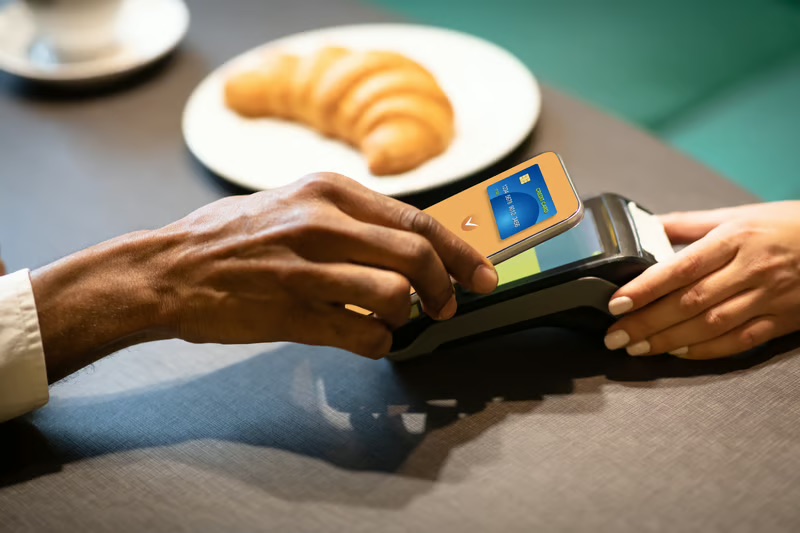
When we developed PayRange, the idea was straightforward. People wanted to buy products from machines, but payment options sometimes prevented them from doing so. Payment became a barrier to the sale. Mobile payments provided a way to remove that obstacle while still allowing operators to continue using existing equipment. The customer benefit was the ability to make a purchase using a payment method they preferred and had readily available.
Designing these experiences requires restraint. A new option can become frustrating if customers have to navigate too many screens, create a complicated account, or repeatedly enter personal or login information. Usability principles emphasize reducing information load to prevent avoidable errors. Those principles are just as useful in the physical world as they are in software applications.
One of the best measures of a new technology is how much work it will eliminate for the customer. That’s a good way to evaluate whether the innovation will improve or complicate the experience when it’s used in everyday settings.
Why Does an Effortless Customer Experience Require Sophisticated Technology?
Simpler is better, and it’s easy to underestimate the technology required to make a simple interaction work. Consider what has to happen when someone uses a smartphone to purchase a drink from a vending machine. For the customer, the entire transaction might take a few seconds.
Behind that interaction, an entire system must coordinate the payment through the correct equipment and communicate the transactions with various accounts. The system must accurately record the transaction, verify it, and report it back to the original equipment for approval. That’s a lot of coordination in a very short amount of time.
The technical challenges appear even more daunting when you consider the equipment involved. Many machines operating in self-service industries were designed long before smartphones and cashless payments existed. They were built around mechanical controls and analog functions that made sense at the time.
Introducing modern payment options into that environment means accounting for the capabilities and limitations of the millions of machines already in service. A significant part of my career has been spent addressing this challenge. Building PayRange required finding practical ways to connect modern payment options with existing machines.
There’s a considerable amount of engineering involved in making these systems reliable. They must perform under varying operating conditions, work with different types of equipment, and remain manageable for the businesses operating them.
The customer shouldn’t have to think about any of that. When a transaction works as expected, the technology can fade into the background. That’s the experience we’re trying to create. Customers have limited patience for problems with ordinary tasks. A payment system that works most of the time can still cause frustrations during downtime.
How Does a Better Customer Experience Translate Into Better Business Performance?
Focusing on the customer experience makes good business sense because the same obstacles that frustrate customers can also affect revenue and operating costs. Digital commerce provides some useful evidence of this connection. Research on shopping cart abandonment found that 17% of American online shoppers abandoned their carts because the checkout process was too long or too complicated. Another 9% bailed due to a lack of payment options.
Of course, online shopping and unattended retail aren’t exactly the same, but these findings show how the buying process can directly affect whether a customer completes a purchase. When you look at this on a larger scale, the business impact can be huge.
“Let’s imagine a person running 1,000 vending machines. If making the payment experience better lets each machine complete just one extra $2 sale per day, that’s $2,000 more in daily sales, or $730,000 over a year.”
That’s a hypothetical example, and the actual results would depend on lots of factors. But it gives you an idea of how even a small improvement deserves attention in a business that processes large numbers of relatively low-value transactions.
Economic value can extend into operations as well. Connected technology can give operators more timely information about how their machines are performing. That might allow them to identify equipment problems or monitor transaction activity more regularly. The information can guide how to direct resources for inventory, maintenance, and other frontline decisions.
That’s part of what makes digital transformation so interesting and valuable in traditional industries. A change that makes a simple purchase more convenient can create opportunities to improve how the entire business operates.
How Do You Measure a Customer Experience That Nobody Notices?
Direct customer feedback is important, but it can only tell part of the story. People are often motivated to contact a business when something goes wrong. They may complain about an out-of-order machine or a failed transaction. But when everything works, they usually have very little reason to get in touch.
“And of course, many customers who experience problems never report them, either. They might decide the issue isn’t worth pursuing or choose another option next time they need the product or service. That creates a challenge for businesses trying to understand the quality of their customer experience.”
Operators should look closely at what customer behavior and operating data show. Completion rates can reveal problems in the buying process. Failed payments might indicate technical issues or insufficient payment options. Repeat customers can show that a location is working well or that people are satisfied.
The ability to collect this information depends on the equipment and systems involved. But traditional cash-operated machines often provide limited visibility into more advanced data. Adding connected systems can help fill some of those gaps. The most useful approach, as always, is to establish a baseline, make an improvement, and observe what happens.
In a business built around routine transactions, some of the best indicators of success can come from problems that occur less frequently.
The Best Customer Experience Lets People Get On With Their Day
When someone goes to a vending machine, gets what they pay for, and walks away, there’s a good chance they will never think about that interaction again. I’ve come to see that as a valuable outcome. It’s not memorable. It’s simply get it and get on with it.
After decades in this industry, running machines and building self-service technology, I’ve learned to value the work behind those everyday moments. Every improvement in design, reliability, and infrastructure helps remove another barrier between the customer and what they want to do.
As more and more established, traditional industries embrace digital transformation, I believe some of the greatest opportunities will come from looking at the everyday tasks customers have grown accustomed to performing, and finding ways to make them easier will unlock incredible value.
In self-service commerce, the best experience is the one that asks almost nothing of the customer, except for what they came there to do.
Frequently Asked Questions (FAQs)
1. What makes a good customer experience?
A good customer experience allows people to accomplish what they need with minimal effort, confusion, or delay. For routine transactions, that often means providing convenient payment options, clear instructions, and reliable service. Customers should be able to complete their purchases without needing to understand the underlying technology or operating systems. When an interaction works exactly as expected, customers may barely notice it, which can be a sign of thoughtful design.
2. How does digital transformation improve customer experience?
Digital transformation improves the customer experience by eliminating outdated processes and introducing technology that simplifies everyday interactions. Mobile payments, connected equipment, real-time availability information, and automated notifications can reduce the time and attention customers spend completing routine tasks. Effective digital transformation begins by identifying where customers encounter friction and developing ways to eliminate those obstacles.
3. Why is reducing customer friction important for businesses?
Customer friction can lead to abandoned transactions, lower repeat usage, and additional customer service demands. In self-service commerce, even a minor obstacle can prevent a purchase because no employee may be available to help. Reducing unnecessary steps makes transactions easier to complete and can create measurable business value. When improvements are repeated across thousands of machines and transactions, their cumulative impact can be significant.
4. Why is customer experience especially important in self-service commerce?
In self-service commerce, customers typically complete transactions without assistance from an employee. That makes payment convenience, equipment reliability, and intuitive processes especially important. When a customer encounters a problem, they may abandon the transaction rather than seek help. Businesses that make their machines easy to use and their services dependable can improve customer satisfaction while creating more opportunities for completed purchases and repeat business.
5. What are the biggest customer experience challenges in legacy industries?
Legacy industries often rely on equipment and operating processes developed around customer behaviors that have since changed. Cash-only payment systems, limited information on equipment availability, and manual processes can create unnecessary inconvenience. Because these practices have been established for decades, businesses may overlook their impact on customers. Modernizing legacy industries requires examining those long-standing assumptions and identifying opportunities to make existing services more accessible, reliable, and convenient.